


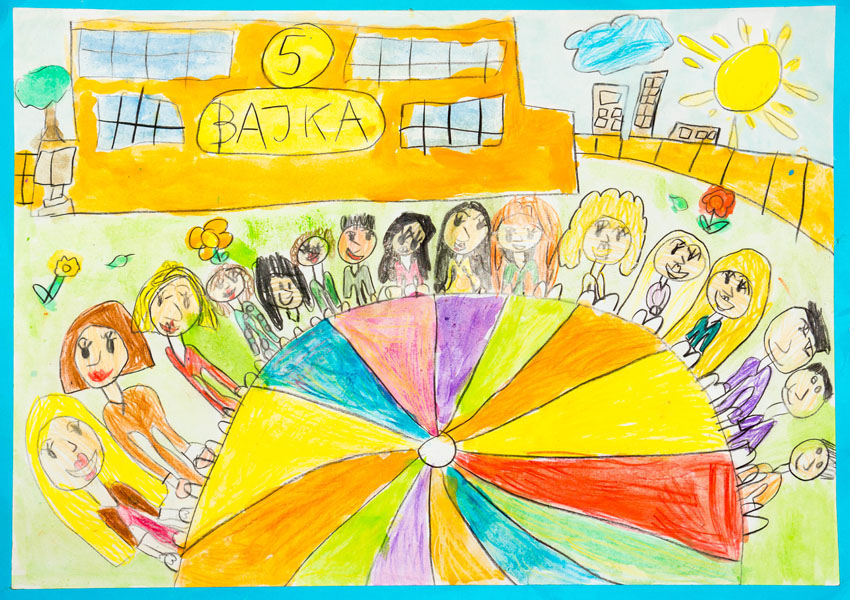
BECKER, rozstrzygnięcie konkursu plastycznego dla szkół pt. “Moja szkoła w mojej społeczności”
- Published on Monday, 20 January 2014 11:36
PIACC
- Published on Friday, 21 January 2011 09:33
PIACC is a response to greater interest in the abilities of adults. It is generally accepted that knowledge and ability rather than level of formal education are necessary for economic development. For this reason, methods are sought to improve the quality of education and training. In the last few years there have been great leaps forward in the discovery of methods to measure ability.
The innovation integral in the PIACC study is the testing of ability rather than the level of formal education. Ability and experience are far more important than diplomas gained many years earlier. Thanks to the results of PIAAC we will gain insights into the real effectiveness of the education systems of the world. The goal of the study is to reach conclusions about the average level of ability and its variation in every country and not to measure the ability of isolated individuals chosen at random for study.
.Programme for International Student Assessment – PISA
- Published on Friday, 21 January 2011 09:33
PISA is co-ordinated by the OECD.
In the study, 15-year old pupils are tested on their abilities to read (comprehension and text analysis), mathematics and science. The study started in 2000 and has been carried out in three-year cycles. The methodology allows comparison within each subject area in time. In each cycle, a particular ability is chosen as the main focus. In 2000 this was reading, in 2003 mathematics and in 2006 it was science. The results for reading obtained in 2009 will provide a deeper understanding of changes that have occurred between 2000 and 2009.
The PISA study is run under the same conditions in each country, i.e. using the same questionnaires and instruments to measure ability. The study is able to discriminate defined measured abilities. The basis of the construction of the instruments is not the school curriculum (as in TIMSS). The tests are constructed on the basis of what international experts agree that each student leaving general education should know, be able and work out to do, in order to function in the modern world.
.Civic Education Study – CivEd
- Published on Friday, 21 January 2011 09:31
CivEd is a project coordinated by the International Association for the Evaluation of Educational Achievement (IEA). Fifty-one countries took an interest in the study, of which twenty-eight resolved to take part. Prof. dr hab. Krzysztof Koseła of the Warsaw University Institute of Sociology coordinated the study in Poland.
The goal of CivEd was to describe the level of knowledge and attitudes of citizenship. The project was divided into two stages. The goal of the first stage (1996-1998) was to gather information on the teaching of citizenship and the information necessary to construct instruments to measure pupils’ knowledge of and attitudes to citizenship. In the second phase (1999) 14-year olds were studied using a questionnaire and a test. In 2000 an additional study of knowledge of economics was carried out on 17-year students in Poland and in some other countries.
.